Tips for Landscaping in a Small Backyard (Complete Guide 2026)
Do you dream of a beautiful backyard where you could spend your time relaxing and entertaining friends but feel hopelessly lost when you look out the window at the size of your yard? Here are a few ideas to show you how a few key changes can make the most out of your small backyard.
Highlight a View
A backyard with a view is the dream for every homeowner. If you are lucky enough to have a naturally breathtaking vista, it’s easy to find your focal point when designing your landscaping. You want to frame the view and make sure nothing obscures it. You can position seating arrangements and even the angle of your deck if you have one so that the view is always the main attraction.
But, what if you don’t have a view? Maybe your yard looks right into your neighbor’s, or the view is stopped short by the building’s wall next door. If the view from your backyard is unsightly, consider using landscape elements like trellises, pergolas, and arbors to manipulate the sightline. Another great way to disguise the view is to layer in greenery. If you have space, shrubs or small trees work beautifully, and if you don’t, vertical growing creepers can climb an entire wall. You can also find inspiration from interior design and create feature walls using directional lumber, paint, and even lighting and art.
Create Rooms or Zones
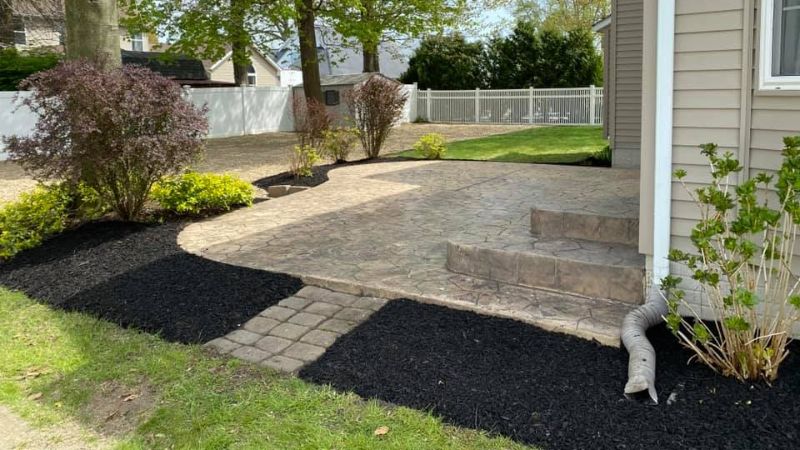
Strategically layout your yard like you would an open floor plan in a home by breaking it into multiple rooms or zones. Use different elements on the ground, such as a flagstone paver patio, to differentiate and designate areas. You can also use privacy screens like lattice or hedges to define a zone. If you are really tight on space, you can use furniture to signal what a “room” is intended for: lounging, mingling, cooking, and/or dining.
Make the most of a compact deck
There are many tricks to designing a functional and stylish deck in a small backyard. Disappearing railings, like glass or cables, expand the perceived deck boundary and let the gaze flow out past the deck into the yard or garden. For irregularly shaped yards, think beyond the traditional square deck and, instead, work around existing elements. Curve a stone patio to capitalize on square footage or build a deck around a tree to gain floor space without destroying nature.
Shop Smart
Build or buy multi-use furniture such as benches with storage or planters to make the most of your space. Flexible designs such as reclining chairs and extendable tables allow you to change the way the area is used relatively easily. Factor in furniture scale when purchasing for your backyard. Stay away from oversized pieces on a small deck and instead, choose the appropriate size for your deck or patio.
Go Big
Maximize interest with plants, shrubs, and trees that grow up but not out so you can enjoy the look of a beautiful garden without conceding precious square footage. Mix columnar evergreens that draw the eye up with dwarf varieties of your favourite bushes for layered interest and depth.
Install a Living Fence
Rather than closing the space in with a traditional fence, consider growing a row of hedges or trees along your property lines. A living fence blends your yard visually with your neighbor’s property and tricks the eye into believing your yard is bigger than it is.
Add Grass
Not every yard needs to be one giant swath of grass but adding thoughtfully designed grassy areas will. Do something unexpected with patches of grass, especially if your yard has more of a courtyard feel. Grow clover or moss between pavers, add faux grass to your deck as an area rug, or install raised grass pavers instead of stepping blocks to soften the edges of hardscaping.
Container Garden
A non-permanent garden gives you unlimited options each season. You can choose from various types of containers and plant veggies, flowers, and even trees. Mix and match shapes, sizes, and colors; or stick with a visual theme depending on your style. A container garden gives flexibility and leaves plenty of room to change your mind. Potted plants are easily moved around the yard and can be replaced or swapped out from season to season. And the containers don’t have to be ground level, either. Add upward interest with vertical planters, climbing vines, or hanging baskets.
Build layers
If you have enough room to add some flower beds, don’t think they have to be deep in order to look full. A layered landscape, inspired by nature, will let you maximize your flower bed space for significant impact. Think low groundcovers like ferns, bulbs, crevice plants and other shade-tolerant shrubs planted beneath taller overhead trees.
Use Every Square Inch
Don’t let any piece of real estate go to waste, no matter how small. If you have a side yard, dedicate it as an intimate dining area. A small alcove by a bay window can become a calm place to sit next to a water feature. The dead space next to the deck’s stairs might make the perfect spot for a mini greenhouse.
Keep things light and airy
If an overfilled and cozy yard makes you feel claustrophobic, feel free to leave some open space to allow the gaze to continue farther and make your yard feel bigger. Strategically designing the sightlines in your yard can help you achieve the feeling you’re after.
Brighten things up
Implement a multifaceted lighting scheme. Multifaceted doesn’t have to mean a lot of different kinds of lighting, although it certainly can. Even something as simple as a tabletop fire bowl and some string lights will up the wow factor when it comes to ambience. If your space and budget allow, you can layer in task lighting and safety lighting. A smart lighting design can illuminate your specimen plants, cooking area, patio table, deck stairs, pathways, and so much more.
Build a tiny shed
Even the smallest yards require some kind of storage solution to store garden tools, off-season decor, patio cushions, maintenance supplies, etc. This is where those adorably small sheds come in. A tiny shed can be easily incorporated into a small yard since they aren’t typically too deep and can be built in many shapes and sizes. They can be built to blend in with an existing structure, like a box on the side of a deck, or outfitted to stand out as the main attraction — picture a cute cottage style shed with perfectly curated shrubs flanking it.
The most important thing to remember when you have limited outdoor space to work with is to put utility first. Prioritize the activities you know you want to do in your backyard and work around them. That includes furniture, greenery, privacy, spatial circulation, make sure it all builds up what you want to accomplish. Sacrificing those key elements will lead to disappointment and, likely, less time in the great outdoors.
Call Weaver’s Lawn Care & Design at (440) 840-6840 to learn how they can turn your small backyard into the outdoor oasis of your dreams.
Get Landscaping in a Small Backyard Services
Turn limited space into a functional and inviting outdoor area with smart design and practical features built to fit your yard.
Get a QuoteFAQs
How much does small backyard landscaping cost in 2026?
Small backyard landscaping typically costs between $500 and $5,000 depending on design, materials, and labor. Basic upgrades stay on the lower end, while patios, decks, and detailed layouts increase the overall cost.
What is the best layout for a small backyard?
The best layout divides the space into simple zones for seating, greenery, and movement. Keeping pathways open and using vertical features helps maintain flow while making the yard feel larger.
How can I make my small backyard look bigger?
Use vertical plants, lighter tones, and avoid clutter. Open sightlines, layered planting, and smart lighting can visually expand the space without changing the actual size.
Is grass necessary in a small backyard?
No, grass is optional. Many homeowners use pavers, decking, or artificial turf instead. A small patch of grass can still be added, but it works best when used intentionally.
What plants work best for small backyard landscaping?
Compact and vertical-growing plants work best. Columnar trees, dwarf shrubs, and climbing vines add greenery without taking up too much ground space.