Best Front Yard Plants & Shrubs for Northeast Ohio
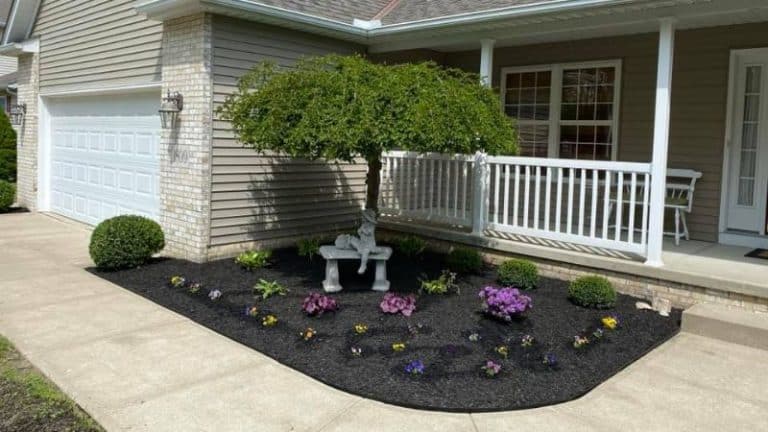
Choosing plants for the front of your house is a little different from choosing plants for the rest of the yard. Foundation landscaping has to look good from the street, work with the architecture of the home, and fit into spaces that are often narrower than homeowners realize. The plants also need to handle Northeast Ohio winters and still make sense five or ten years after they are installed.
At Weaver's Lawn Care & Design, we design and renovate residential landscapes throughout Lake County and surrounding Northeast Ohio communities. One of the most common problems we see is not a lack of landscaping. It is landscaping that was planted without enough thought about mature size. Shrubs that looked appropriately sized when they were installed eventually cover windows, crowd walkways, grow against siding, or require constant trimming just to keep them under control.
The best plants for the front of a Northeast Ohio house depend on sunlight, drainage, available space, the height of your windows, and how much maintenance you want to do. There is no single plant combination that works for every property, but there are several shrubs, perennials, grasses, and small trees that we regularly consider when planning a front landscape.
Here are some of the plants worth considering for homes in Perry, Madison, Mentor, Painesville, Concord, Kirtland, Chardon, Geneva, and surrounding Northeast Ohio communities.
Start with mature plant size, not how the plant looks at the nursery
This is probably the most important consideration when choosing foundation plants. A young shrub in a nursery container can look surprisingly small against a house, which makes it tempting to plant several close together. The problem becomes obvious a few years later when those plants have doubled or tripled in size.
Before selecting anything, look at the available space and consider:
-
- The mature height of the plant compared with nearby windows
- How wide it will become and how far it should sit from the house
- Whether it will eventually interfere with steps or walkways
- How much pruning will be required to keep it within the available space
A professional landscape design accounts for those mature dimensions before the plants are installed. A newly planted bed may look slightly open at first, but that is usually preferable to creating an overcrowded landscape that needs another renovation in five years.
Panicle hydrangeas are an excellent choice for Northeast Ohio
Hydrangeas are one of the first plants many homeowners think of when updating the front of a house, and for good reason. Panicle hydrangeas are particularly useful in Northeast Ohio because they are hardy, produce large summer flowers, and are available in sizes that work in many different landscape situations.
The variety matters. Some hydrangeas can become large shrubs, while compact varieties are much better suited to smaller foundation beds.
Hydrangeas can work well:
-
- Along larger sections of foundation
- At corners where additional height is useful
- In groups where strong summer color is wanted
- Behind lower perennials and ornamental grasses
If your existing front beds are filled with shrubs that have become too large, a garden bed renovation is a good opportunity to reconsider both plant selection and bed depth. Sometimes the better solution is not finding an unusually small shrub, but giving the new landscape more room to develop.
Spirea works well when you need a smaller flowering shrub
Spirea is another dependable option for sunny Northeast Ohio landscapes. Many varieties remain relatively compact, produce flowers during the growing season, and offer foliage ranging from traditional green to brighter yellow and deeper tones.
That combination makes spirea useful when you want something more interesting than a row of green foundation shrubs but do not have room for larger plants.
Consider using spirea:
-
- Below windows where a compact shrub is needed
- In repeated groups through a sunny front bed
- Between larger structural plants
- With perennials and grasses that provide contrasting texture
Spirea can tolerate pruning, but the goal should still be choosing a variety that naturally fits the location. When we plan a new landscape installation, we would rather give a shrub enough room to maintain its natural shape than create another plant that has to be repeatedly sheared to fit.
Compact evergreens give the front of the house year-round structure
A Northeast Ohio landscape needs to be considered in January as well as July. If every plant around the house is deciduous, the front beds can look surprisingly empty once the leaves drop and perennials go dormant.
Evergreens solve that problem, but you do not necessarily need a continuous hedge across the front of the house.
Compact evergreens can be used:
-
- Near the front entrance
- At important corners of the house
- Behind flowering perennials
- As repeated structural plants within mixed beds
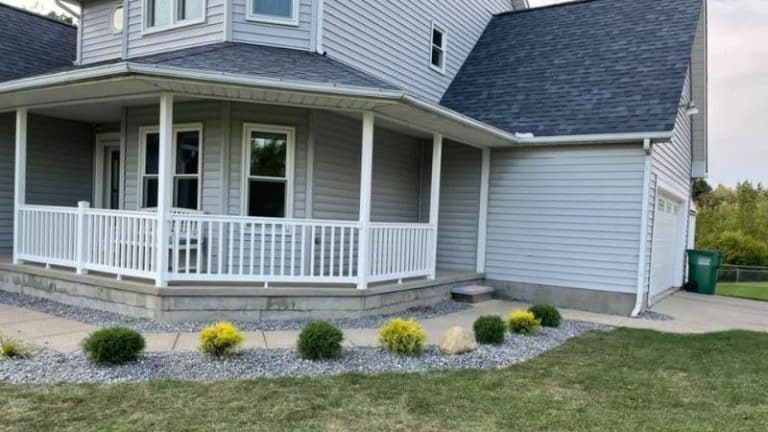
Boxwoods and other appropriately sized evergreen shrubs can provide that structure without dominating the landscape. The key is choosing varieties based on their natural size rather than relying on constant pruning. Established shrubs that are already appropriately located can also be maintained with professional hedge and bush trimming instead of automatically replacing them.
Ninebark can add darker foliage and a more natural look
Ninebark is a native shrub that works particularly well when the front landscape has enough room for a larger plant. Depending on the cultivar, foliage can range from green to deep burgundy and purple, which provides useful contrast against lighter shrubs, grasses, and flowers.
Ninebark also works well in landscapes that are moving away from the traditional row-of-evergreens look toward something a little more natural.
It can be a good choice:
-
- Near larger corners of the house
- In deep foundation beds with adequate growing room
- As a background for lower perennials
- Where contrasting foliage would improve the planting design
The biggest caution is size. Some ninebarks become substantial shrubs and should not be squeezed underneath low windows. During a professional planting design, the particular cultivar matters just as much as the plant species.
Catmint is a useful perennial for the front edge of sunny beds
Once the larger shrubs are established, perennials can fill the spaces between them and bring more seasonal color into the front yard. Catmint is one of the easier plants to use in sunny locations.
Its blue-purple flowers and softer growth contrast nicely with more structured shrubs. It can also flower for an extended period, making it useful when you want reliable color without replanting annuals every spring.
Catmint works particularly well:
-
- Along the front edge of larger garden beds
- Beside walkways where there is room for its natural shape
- In groups rather than as isolated individual plants
- In combination with hydrangeas and ornamental grasses
Keeping perennial beds properly mulched also makes them much easier to manage. Weaver's provides mulch installation to help give renovated beds a finished appearance while reducing exposed soil where weeds can establish.
Black-eyed Susans bring dependable summer color
Black-eyed Susans are a natural choice for homeowners who want a little more color and a less formal feel around the front of the house. Their bright yellow flowers work well with green shrubs, dark-leaved ninebark, ornamental grasses, and other flowering perennials.
They are especially effective when planted in groups. Scattering individual plants throughout a large bed can make the landscape feel busy, while repeated masses of the same perennial create stronger blocks of color.
They are useful for:
-
- Sunny front garden beds
- Pollinator-friendly landscapes
- Natural or native-inspired planting designs
- Adding summer color between larger shrubs
When Weaver's completes a front garden bed renovation, perennials are usually considered as part of the larger planting plan rather than being used simply to fill empty spaces.
Hostas make sense on the shaded side of many Northeast Ohio homes
Not every front yard receives full sun. Mature trees, neighboring homes, porches, and the orientation of the house can create areas that receive very little direct sunlight.
Hostas are still one of the most useful plants for these conditions. Their foliage provides color and texture even when flowering plants struggle, and the enormous number of available varieties makes it possible to work with different bed sizes and color combinations.
Hostas are worth considering:
-
- Along shaded portions of the foundation
- Near mature trees where growing conditions are suitable
- On north-facing areas of the house
- As repeated foliage plants beneath taller shrubs
They are not ideal everywhere. Deer pressure can make hostas frustrating on some Lake County properties, and excessively wet or dry conditions can also influence what should be planted. That is why a landscape evaluation should consider the actual conditions on the property rather than relying on a standard plant list.
Ornamental grasses are great for breaking up rows of shrubs
If every plant around the front of a house has the same rounded shape, the landscaping can start to feel heavy. Ornamental grasses introduce a completely different texture and move naturally in the wind, which makes mixed beds feel more relaxed.
There are grasses available in a range of sizes, so they can be used as small accents or as more substantial plants where additional height is needed.
They can work well:
-
- Between groups of flowering shrubs
- Near corners or transitions in larger beds
- Along sunny portions of the foundation
- Where late-summer and fall interest is important
Most ornamental grasses require an annual cutback, but otherwise many are relatively straightforward to maintain. Weaver's also provides seasonal yard cleanup for homeowners who want help handling perennial and ornamental grass cleanup.
Serviceberry can give the front landscape some much-needed height
Sometimes the missing piece is not another shrub. If the house is tall or the front yard has large open planting areas, a small ornamental tree can help bring the scale of the landscaping into better proportion with the home.
Serviceberry is a native option worth considering in Northeast Ohio. It can provide spring flowers, berries, fall color, and attractive branching, giving it value during several parts of the year.
A serviceberry can work well:
-
- Near a corner of the house with sufficient room
- As a focal point in a larger garden bed
- In a native-inspired landscape
- Where the front yard needs another layer of height
Trees require more planning than smaller plants because mistakes become harder to correct as they mature. A landscape design should consider the mature canopy, distance from the house, windows, utilities, driveway, and overall view from the street before determining where an ornamental tree belongs.
Do not try to put every good plant into the same garden bed
A list like this can create another problem if homeowners try to use everything at once. A good front landscape does not need ten different shrubs and fifteen different perennials.
In fact, using fewer varieties repeatedly often creates a much stronger design.
A typical planting palette might include:
-
- One primary flowering shrub repeated throughout the beds
- A few compact evergreens for year-round structure
- Two or three perennial varieties used in groups
- One ornamental grass or accent plant for contrast
Repeating plants creates continuity across the front of the property and generally makes maintenance easier. It also helps avoid the random collection of plants we often encounter when starting an overgrown garden bed renovation.
Choose plants that provide interest at different times of year
One of the easiest mistakes to make at a garden center is buying whatever happens to be flowering that week. If an entire landscape is purchased in May, it is possible to end up with a yard that looks fantastic in late spring and fairly ordinary for the rest of the year.
A better front landscape changes through the seasons.
You might combine:
-
- Spring-flowering trees or perennials
- Hydrangeas and other summer-flowering shrubs
- Ornamental grasses and plants with fall color
- Evergreens that remain visible throughout winter
This is one of the advantages of planning the entire front yard landscape at once. Each plant can be chosen for the role it plays in the overall design rather than simply because it looks attractive by itself.
Think about maintenance before deciding how much to plant
A full, layered landscape can still be relatively manageable, but every plant adds some level of maintenance. Perennials eventually need cleanup, shrubs occasionally need pruning, and garden beds need attention throughout the growing season.
If you do not enjoy working in the yard, tell your landscaper that before the planting plan is developed.
A lower-maintenance design may use:
-
- Fewer plant varieties repeated in larger groups
- Shrubs that naturally fit their spaces without constant pruning
- Perennials that return reliably each year
- Mulched beds with simple, easy-to-maintain edges
Weaver's also offers landscape maintenance services for homeowners who want professional help maintaining the finished property. Designing with future maintenance in mind is still worthwhile, even when someone else will be doing the work.
Do not overlook the garden bed itself
You can choose excellent plants and still end up with an awkward front landscape if the bed is too narrow, poorly shaped, or difficult to maintain.
Older foundation beds are often much shallower than what is needed for a layered planting. Expanding them can create enough room to move shrubs farther from the house, add smaller plants in front, and give everything space to mature.
A well-planned front bed should provide:
-
- Enough depth for the plants being installed
- Clean edges that are practical to mow around
- Room between shrubs and the foundation
- Mulched areas that tie the entire planting together
Professional mulch installation can then finish the beds, provide a consistent appearance, and help reduce weed growth around the new plants.
Choose a Northeast Ohio landscaper who understands how these plants will mature
The best front landscaping is not necessarily the one with the most plants or the most expensive plants. It is the one where everything has a reason for being where it is.
Weaver's Lawn Care & Design is a locally owned, husband-and-wife operated company providing residential landscaping and garden bed renovation throughout Lake County and surrounding Northeast Ohio communities. Bob Weaver manages operations, crews, and client relationships, while co-owner Jessica leads the landscape design side of the business.
When an older front landscape needs to be renovated, we can look at what is already growing successfully, identify plants worth preserving, remove plants that have become a problem, and develop a new layout around the house and the conditions on the property.
That is much different from taking a list of popular shrubs to the garden center and trying to figure out where they should go. Plant selection, spacing, bed design, sunlight, mature size, and seasonal interest all need to work together if the finished landscape is going to age well.
Proudly serving homeowners throughout Lake County and Northeast Ohio
Weaver's Lawn Care & Design provides landscape design, planting, garden bed renovation, landscape lighting, mulch, lawn care, and property maintenance throughout our Northeast Ohio service area, including:
-
- Madison
- Perry
- Geneva
- Mentor
- Painesville
- Concord
- Chardon
- Kirtland
- Eastlake
- Wickliffe
- Willowick
Front landscaping in Northeast Ohio has to work through hot summers, freezing winters, spring rain, changing shade, and everything else our seasons bring. Choosing plants that fit those conditions and giving them enough room to grow is far more important than following a particular landscaping trend.
If the rest of the property also needs attention, Weaver's can coordinate the planting with landscape lighting, mulch, shrub trimming, seasonal cleanups, lawn care, and ongoing maintenance so the finished front yard works with the property as a whole.
Have your front landscaping evaluated before buying new plants
Hydrangeas, spirea, compact evergreens, ninebark, catmint, black-eyed Susans, hostas, ornamental grasses, and serviceberry can all be excellent choices for Northeast Ohio homes. The important part is figuring out which of them actually belong in your yard.
If your existing shrubs are covering windows, growing into the walkway, or requiring constant pruning, simply replacing them with new plants without changing the layout can put you right back in the same position a few years from now.
A professional evaluation can determine which existing plants are worth keeping, where garden beds should be adjusted, which plants fit the available sunlight and space, and how the new landscaping can provide interest throughout more of the year.
Contact Weaver's Lawn Care & Design to request a front yard landscape evaluation and estimate in Perry, Madison, Mentor, Painesville, Concord, Kirtland, Chardon, Geneva, or the surrounding Northeast Ohio area.